The History of Armagnac

  • The history of Armagnac - Late 20th Century

    The dominance of cognac in the French spirit markets has created over the years a market inferiority complex, perhaps partly because the region has always been much poorer than regions to the north, but also because understanding of the spirit and its history has never been fully explored.

    The Bureau National Interprofessionel de l’Armagnac (BNIA),  is much smaller than its Cognac counterpart and cites some of the benefits of the golden nectar, especially the therapeutic qualities claimed by one doctor of medicine, Prior Vital Dufour who was ordained Cardinal of the Catholic church by Pope Clement in 1313. Amongst some of its 40 virtues it is claimed… "it fries the egg, conserves meat cooked or crude, and in the presence of herbs, extracts their virtues. It cures gout, canker and fistula by ingestion, restores the paralysed member by massage and heals wound of the skin by application. It renders men joyous, preserves youth and retards senility".

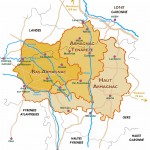
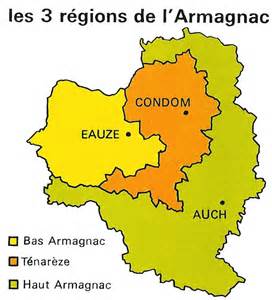
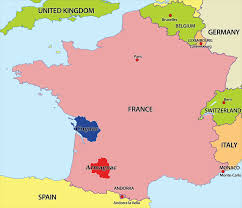
    In 1909 a decree defined the permitted boundaries for the production of armagnacs, by organising three large boundaries or crus. Bas armagnac has the largest production of armagnac and is regarded by most as having the finest armagnacs. 57% of all production comes from this region.  The main town in the region is Eauze. To the east is the smallest cru of Tenarèze, whose market town and traditional capital of Armagnac is Condom. This region produces about 40% of all armagnacs. This leaves the third cru, Haut Armagnac, with such a small production that their products are rarely seen, the region mainly being created to meet 19th century market demands.

    During the war supplies of the spirits stagnated and markets were difficult to supply, leading to many producers suffering financial difficulties. Today, armagnacs biggest market is Britain followed by Japan, Spain and Germany, but by the turn of the 20th century only 20,429 hectolitres of pure alcohol were produced.

  • The history of Armagnac - 20th Century Growth

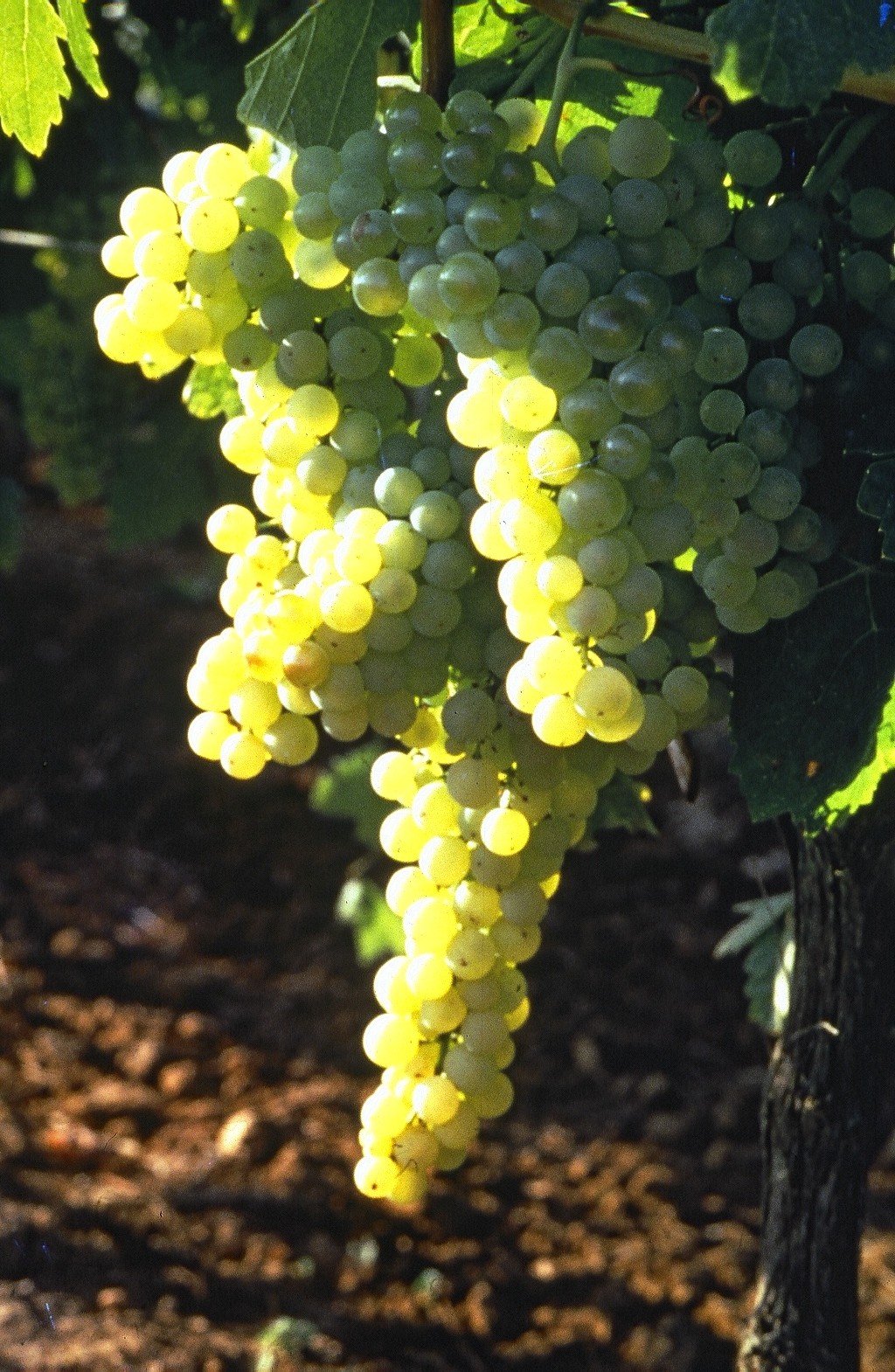
    Phylloxera was no less kind to the Armagnaçaise than to those in the rest of France and although a few growers managed to continue producing grapes, the vast majority lost everything they were growing in their vineyards. The Folle Blanche was much in favour in Gascogne, but was also one of the most vulnerable to the louse which found the weakened roots of the heavily cropped vines a wonderful source of food. Many small producers simply gave up and turned their land over to crops that provided easier and more importantly, faster and more accessible revenue. The decline in available brandies from the region also coincided with a lull in demand from British customers, who were the largest source of export trade. Levels of austerity at the end of the century and during the early First World War years had allowed the English to lose interest in the fruity brandies of the region. The Armagnaçaise also had their own problems with access to the export markets mainly as a result of their failure to further their markets in other countries. Replanting after the phylloxera was slower than other regions and only the larger growers who already had an established market were able to afford the cost of replanting.

    In many ways, as is so often the case in French Viniculture, prosperity started to return to the industry with modernisation and greater demand from other countries. A new vine called the Bacco was introduced - it produced fruity wines which cropped later, providing more depth of flavour in the wines and greater flexibility in the harvest. Just at the time when sales were hitting a low, the wars came along which greatly affected sales of cognacs to the north. This enabled the fruity wines of Gascogne to be recognised for their distinctive flavours, finding favour in the bars and restaurants in Britain during the 1920’s when brandies became allied to the fashionable mid-war period.

  • The history of Armagnac – 19th Century Modernisation

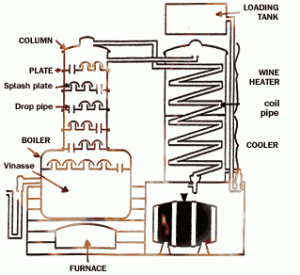
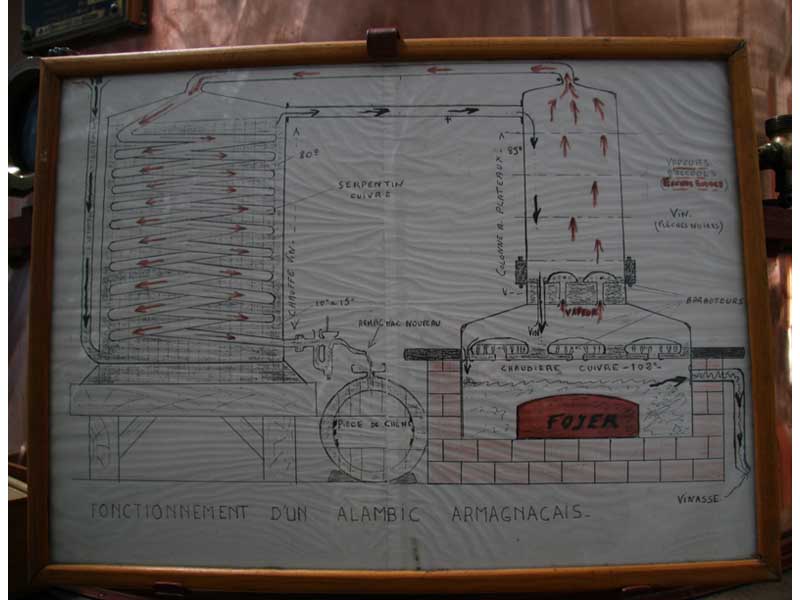
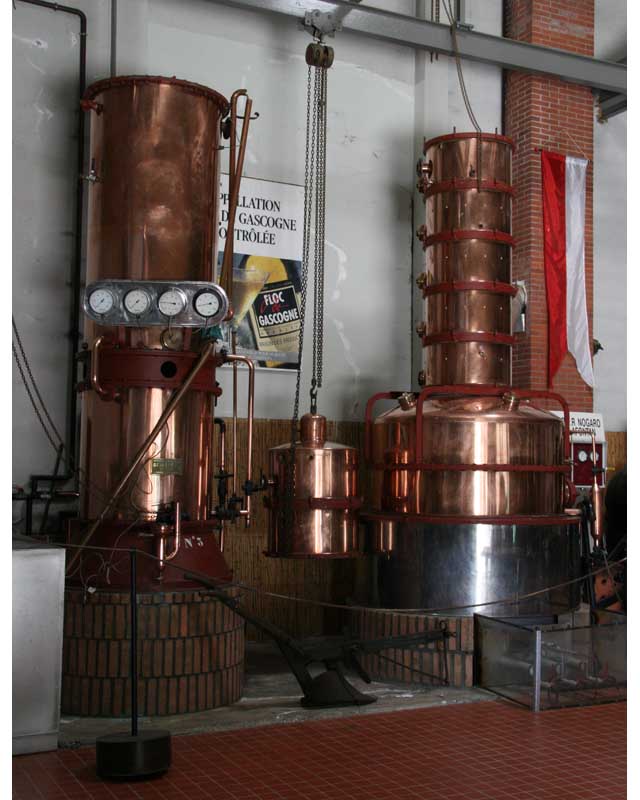
    Two important changes happened in the 19th century that changed the fortunes of the Armagnaçaise for the better. The first was the introduction of the continuous still which is essential for extracting armagnac’s particular qualities. The cognac stills used previously were unsuitable for wines from the sandy and clay soils around much of the region. They were also too expensive for the peasants, who needed a simpler and more easily transportable still which could be easily moved from farmhouse to farmhouse, and which used cheaper fuel. They became quickly interested in the continuous still, invented by Edouard Adam from Montpellier. The idea was taken up by Antoine de Melet, Marquis de Bonas, a landowner famous for new ideas. By 1819 a factory in Eaux was making the new still, which was perfected by a peasant called Verdier who gave his name to the final apparatus. Unlike all the other types of continuous stills, the Verdier model retained more of the essential elements in the wines than did the orthodox pot-stills. The brandies from this still developed in time to a more complex spirit than cognac, albeit at the expense of some initial roughness and woodiness.

    The second change was the development in the 1830’s of the river Baise to a canal providing economical transport from the heart of the Tenareze region to Bordeaux, a world centre for trade in wines and spirits which allowed the Armagnaçaise a way to sell their special brandies. By then, unfortunately, the Cognaçaise had a 150 year lead. Nevertheless, the 50 years after the canal was built witnessed the first real breakthrough to the world markets. Some of the most famous names were founded around this time. The first, Castarède, which had previously been at Lavadac moved with other merchants to Condom nearer the centre of the region. The boom was real enough; in 1804 the Gers produced 50,000 hectolitres of pure alcohol, a figure which had doubled by 1872 from 100,000 hectares of vines.

  • The history of Armagnac – 16th, 17th and 18th Century

    During the 16th century, a spirit distilled from a wine in Toulouse known as aygue ardente or eau de vie became popular with the Dutch to supply their ships. They were happy to buy their the spirit at Bayonne, which after some time became known as Armagnac, and was found comparable in quality to the brandy from Cognac. Local historians claimed its international fame, but in reality armagnac remained something of a rustic curiosity. This was a puzzle since the region had an ample supply of acid wine and plenty of wood to burn. It had contact with the Dutch to provide a market and an older indigenous tradition of distillation than Cognac. Indeed, we can still see the earliest known brûleries set up at the Château de Busca in Maniban in the 17th century, by Thomas de Maniban, a member of the legal aristocracy who successfully sold fine wines of the region.

    The armagnacais lacked the commercial aggressiveness to sell their fine spirits and as a result armagnac did not compete as a rival to cognac in the market which counted – the fashionable society of Restoration London - and became submerged in the mass of brandies from Bordeaux and “Nants” which were considered  inferior to cognac. By the end of the 17th century armagnac was a well-integrated rural industry. Yet even when the Bordeaux monopoly collapsed during the 18th century, it remained largely local because of transport problems. Crucially the river Baise, which empties into the Garonne, was not navigable beyond Pont-de-Bordes at Lavadac at the very northern end of the region. It was this single difficulty that largely prevented the eaux de vie from being shipped to the ports, particularly Bordeaux, where merchants were trading in the local wines and eaux de vie with the merchants from England, Ireland and Holland. Armagnacs great variation from cognac, its great fruitiness and excitement to drink has kept the local and traditional methods alive through the 18th and 19th centuries for our enjoyment today.

  • The history of Armagnac - 14 and 15th Century

    Geographically, Armagnac appears for the first time in the middle of the tenth century. By the fifteenth century, the English kings had come and gone for the past 450 years Armagnac (indeed the whole of Gascony) has been a happy country without much history.

    In the 14th and 15th centuries, Bayonne, the nearest port had the unusual freedom to trade in wine. This was important as the only ways to get produce from the region was by the rivers, since no roads existed to ship their wines to the ports. In many ways the easiest outlet was the long haul down the river to Bordeaux. This was a problem though, since through the Middle Ages the merchants of Bordeaux protected their own wines by refusing to allow the sale of wines from the Haut Pays, the river basins of the Garonne and the Dordogne before Christmas each year. Wines were fragile then, so the ruling effectively excluded the wines of Cahors, Bergerac, Montbazillac and Armagnac from the lucrative British and Dutch markets. The only alternative was to haul the wines by ox cart to the river Midou for transport to Bayonne on barges - a journey that took 3 days to travel 38 kilometres. Distilling the wine at least increased the value of the contents of the casks so laboriously transported...

    Armagnac had retained an association with Arab science in the Middle Ages through the famous University of Montpellier, closely connected with the great Islamic seat of learning at Salerno. It was not surprising that the Armagnaçaise learnt  the Arab art of distillation before any other French wine making district. According to a document in 1411 in the archives of the Haute Garonne, a man called Antoine distilled wine at Toulouse to obtain aygue ardente, also called aygue de bito or eau de vie (water of life), a definition which emphasizes that the products were originally used for medicinal purposes. A further document in 1441 records that “distilled spirit relieves pain, keeps one young and brings with it joy”.

  • The history of Armagnac – The Oldest French Brandy

    Armagnac, as the locals invariably inform even the most casual visitor, is at once the oldest and youngest spirit in France. Oldest because it was first distilled in the middle of the 15th century and youngest because the Armagnaçaise are still arguing over how it should be made. President de Gaulle talked about the problems of governing a country which made 300 different cheeses. Armagnac has as many ways of making brandy.

    The region of Armagnac has always been a very special example of that elusive concept, la France profounde, even now well away from the madding crowds – and their motorways. They are essentially Gascons, famous as swaggerers, soldiers (d’Artagnam was the most famous), lovers of rich food (truffles and Fois Gras), and drink. Their homeland is as near a rural paradise as makes no difference, gentle, fair, fertile countryside as yet unspoilt by urban sprawls. It is tucked away a hundred miles south of Bordeaux stretching back from the sands of the Landes through a series of gentle valleys with none of the grim monoculture which marks other vineyards, but providing a most agreeable and varied vision of rural bliss.

    That was its attraction – but the corollary was its unsuitability as a production centre for an internationally traded spirit. Armagnac was and still is a reflection of French individualism, while still a deeply united community in which the merchants are, for the most part, members of the same class as the growers. Unlike Cognac, there has never been a class war in Armagnac. By themselves individualism, change and experiment would not be of interest if the brandy was not exciting to drink. It is better than that; earthier than cognac, but, at its best, offering a closeness to nature, a depth of fruit and warmth that even the finest cognacs cannot match. Because the choice of three grapes and two methods of distillation, the brandy’s potential character is enormously varied.

  • The history of Cognac – In the beginning, wine into water

    As early as the 16th century, when the English had been chased from France for more than a century, we find the expression Vin du Cognac. Wines shipped along the Charente from the town of Cognac were traded, initially for salt but later for timber, furs and wools which had been shipped from England, Ireland and Holland.

    The Coastal areas around La Rochelle were already developing vines as a stable crop and further south in Bordeaux the trade in wine was more advanced. Gradually vines were planted further inland in the Bois or woody areas usually on the slopes since the flatter land was still favoured for growing grain.

    The term Vin de Ritzel or wines from La Rochelle was generally more favoured than the Vin de Cognac which had to be shipped a considerable distance from Cognac along the Charente by barge to Rocheforte and then onto La Rochelle. The wines were often found to be rancid due partly to being kept in cellars by the negociants until they could be shipped and partly to their long journey to the port for shipping to the more northerly ports. As a result they were condensed by distillation, a skill learned from the Dutch (who were skilled coppersmiths) and famous for their gins. The resulting water clear spirit became known by the traders as Eau de Vie or Water of Life.

    In 1576 a local historian, J Corlieu emphasised that the “Grandes Champagnes de Segonzac” produced great quantities of fine wines that were shipped down the river all over the world. A century later these emerged as some of the best wines for distillation into condensed wine or eau de vie.

7 Item(s)

per page